


Small mercies
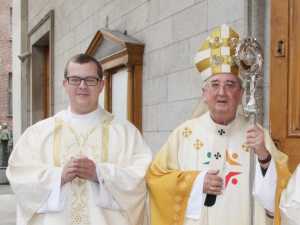
That their addition to the ranks made the national headlines speaks volumes for the current state of the Catholic Church. What should have been a routine occasion, a humdrum day in the priesthood, is now cause for celebration, reason to boast. Convincing two men, just two, that offering themselves to the Almighty is the way to go, constitutes a good day for the higher-ups in this embattled institution. These two newcomers will be immediately set to work, expected to make up for a shortfall which has seen the number of acting priests in this country drop by 500 in the past ten years. Their recruitment will alleviate the pressure, stick a bandage on the wound, and offer solace to those of faith. But theirs is a losing battle, one which is seeing priests dying off quicker than they can be replaced.
However, unlike the appointment of Father Daly and Father O’Shaughnessy, that’s not news. We all know that the Church is in decline, that its influence is on the wane, its ubiquity receding, and that, if things carry on as they are, it will someday, soon, cease to exist. Those are just facts. You can’t haemorrhage staff on a yearly basis, spread your resources over increasingly thin margins, and expect to prosper. You can’t ask the few to carry out the duties of the many, to feed the multitudes, when the very organisation which employs them is on its knees. But that’s what’s happening.
 Of course, it’s impossible to discuss the Catholic Church in Ireland without, at least in some way, referring to the litany of controversies which have dogged it in the past decades. These, more than anything, have led to its current plight, a situation which sees less than two thousand priests currently practising in this country. Not only has the Church been embroiled in one scandal after another, but it has unequivocally failed in its efforts to redress the damage done by stories of clerical abuse and mother and baby homes which have shocked and appalled the nation. Yet it’s had its chances, it’s had ample opportunity to start over, to learn from its mistakes and move on, fresh and reinvigorated for the modern era.
Herein lies the crux of the matter and the thing which immediately sprung to mind upon hearing the news of the two latest recruits. Why, today, are we still awaiting the announcements which would, in one foul swoop, ease the staffing crisis currently being felt in the Catholic Church? Why, instead of digressing, discussing and debating the issue, are we not welcoming the first female priests to Irish alters, swiftly followed by their husbands, live-in partners, or whomever? And why must these two new priests, Father Daly and Father O’Shaughnessy, commit themselves to a life of celibacy as part of their vocation?
You might have gathered by now that I am far from a practising Catholic, but that doesn’t make me insensitive to the beliefs of those who are. I appreciate that nothing stirs the soul like religion, that just by questioning the machinations of the Church I am risking eternal damnation, dancing with the devil, and traipsing upon the graves of my ancestors. But it is this very devotion, which frequently manifests itself as obstinacy, which threatens the existence, at least in its current guise, of one of the cornerstones of Irish society.
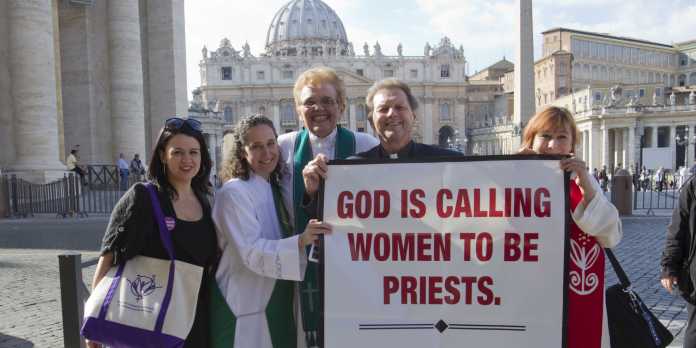
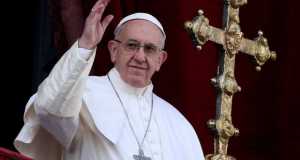 Last year Pope Francis set up a committee to look at the possibility of introducing female priests into the Church. One of the chief roles of that committee was to study the historical roles of women in the ministry and whether they were ordained in the same way as their male counterparts. The findings of the committee were expected to be presented to the Pope within two years of its inception. As of yet there have been no updates, no intimation that a woman can just as easily perform the sacraments of marriage, baptise a child, read the gospel according to Luke, in the same way a man can, that one’s chromosomes, one’s DNA, has no bearing on the message relayed to one’s flock. The likelihood is that this, carefully selected, body of twelve disciples, six men and six women, will return with a recommendation to one day, when the sun, the moon and the stars align, allow female priests to practise, but only on every fourth Sunday of each second month.
I know I’m being trite here, but, like it or not, my views are representative of a large proportion of the Irish public, a vast demographic for whom the Church is an outdated institution, one resistant to change and incapable of introspection. The concept of marriage, of sex, of intercourse and carnal desire, the natural phenomena which has enabled me to write this and you to read it, is still associated with guilt and sin in the Church, a grubby undertaking which should only occur when two people, of opposing sexes, are irretrievably in love, betrothed, beholden and bound as one. A pastime so abhorrent, so base, that the person eulogising before you could never submit himself to it, instead leading an alien existence, pushing to one side the desires and needs of every person who has ever walked this earth.
By simply allowing its members to marry, humanising what, for many, are still a strange, curious breed, the Catholic Church could take the first steps towards, if not erasing, then at least obscuring its repugnant past. Where once the chastity of its priests added to the Church’s mystique, its otherworldliness, it now elicits mistrust, creates distance and, in some cases, suggests abnormality. One can’t help but feel sorry for those who have devoted their lives to God and had their vocation smeared by the actions of a vile minority, but in a crisis this deep the cause is irrelevant. Rather than absolve itself of blame and pray for the sins of others, the Catholic Church must plan for the future and decide if it wants to have one.
Ceremonial duties aside the Church will continue to have a degree of influence in Irish society, at least in the short-term. It’s involvement in our education system – it still owns 90% of the primary schools in the country – means it will have a say in the future of this generation and probably the one after it. But even that arrangement is being challenged, with multi-denominational and atheist parents no longer willing to have religion on their child’s curriculum. The overall picture is a decidedly grim one, and no matter what the census figures say, even if 78% of us do identify as Catholic, don’t for one second think that means anything. If it did, the ordination of two priests wouldn’t be headline news.
Making a show of himself
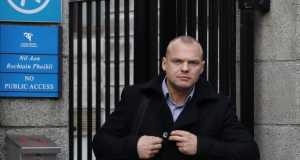 The latest instalment in ‘Claims gone bad’ features a Latvian stripper called Nauris Zeps (stage-name ‘Blade’) who took to the courts to seek compensation for a back injury caused by a car-crash. Zeps had been rear-ended by another driver in 2014 and since then, according to his testimony, had suffered chronic back pain to the extent that he had been unable to lift his new-born child or play with his six-year old. Pretty heart-wrenching stuff I’m sure you’ll agree.
Don’t be too sad though, because if successful, Zeps would have walked away with up to €40,000; more than enough to pay for extensive surgery and rehabilitation. As it was he exited the court empty-handed. The reason? Facebook videos showing him getting his kit off as part of the Chain Gang dance troupe, twerking it, jerking it and generally having a good time. The judge wisely decreed that such gesticulations weren’t in keeping with the complainant’s injuries, stating that the dancing, “while not extremely physical, certainly required a good deal of effort, involving stretching, extension of the back and a clear ability to move and bend down very easily.”
The case was subsequently struck out, leaving Blade free to continue his duties as a lusty lothario and his poor unloved children to sit at home yearning for a hug, a cuddle, anything at all.