


Facebook Instagram Linkedin X Youtube
  • News
    • Breaking news
    • Business
    • Community
    • Crime & Court
    • Education
    • Environment
    • Health
    • Heritage
    • Housing
    • Local News
    • Politics
    • Security
  • Sport
    • Gaa
      • Camogie
      • Gaelic Football
      • Hurling
    • Rugby
      • Munster
      • Ireland
    • Soccer
    • Golf
    • Other
      • Athletics
      • Boxing
      • Golf
      • Basketball
  • Lifestyle
    • Arts
    • Entertainment
      • Music
      • Film
      • Comedy
    • Property
    • Sponsored Content
  • Photos
  • Digital Edition
Limerick Post
18.2 C
Limerick
Wednesday, June 24, 2026
Facebook
Instagram
Linkedin
X
Youtube
Threads
  • Classifieds
  • In Memoriam
  • Advertise
    • Limerickpost.ie
    • Advertise
  • About us
  • Contact Us
  • News App
Limerick Post
  • News
    • Breaking news
    • Business
    • Community
    • Crime & Court
    • Education
    • Environment
    • Health
    • Heritage
    • Housing
    • Local News
    • Politics
    • Security
  • Sport
    • Gaa
      • Camogie
      • Gaelic Football
      • Hurling
    • Rugby
      • Munster
      • Ireland
    • Soccer
    • Golf
    • Other
      • Athletics
      • Boxing
      • Golf
      • Basketball
  • Lifestyle
    • Arts
    • Entertainment
      • Music
      • Film
      • Comedy
    • Property
    • Sponsored Content
  • Photos
  • Digital Edition
Home News Education UL research finds political polarisation can extend to non-political topics
  • News
  • Education
  • Limerick
  • Local News
  • Politics

UL research finds political polarisation can extend to non-political topics

By
Katie O'Donovan
-
August 1, 2023
Share
Facebook
X
WhatsApp
Linkedin
Email
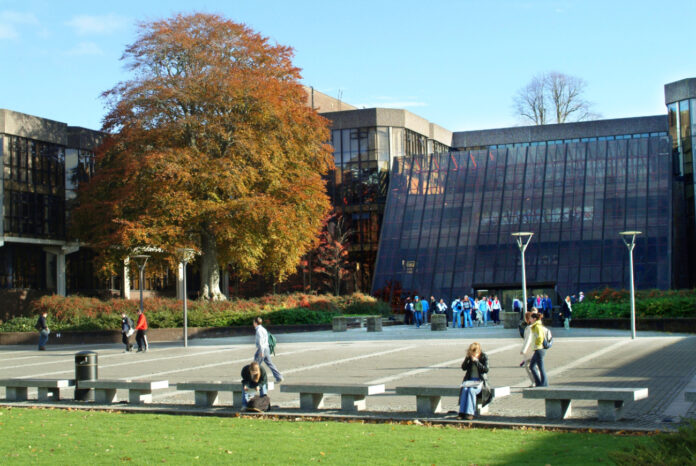
    The main building at the University of Limerick.
    Advertisement

    NEW UNIVERSITY of Limerick (UL) research has found that political polarisation can now extend to topics that are non-polarised or non-political.

    A team of researchers from the university, led by Mike Quayle in the Department of Psychology, has shown how initially small differences in people’s preference on a given topic can be quickly amplified, often leading to stark divergences in world views.

    The research was conducted using both laboratory experiments and agent-based (computer) modelling exploring social processes in simulated ‘mini-societies’.

    The study’s main author, Dr Dino Carpentras, said: “Diversity of political opinions is a sign of a healthy democracy. In contrast, a splitting of societies into competing camps that progressively dislike each other often prevents agreement and can cripple political processes.”

    Advertisement
    Insulate Your Home with Cosyfill!
    Save up to 35% on Heat Loss – SEAI Grants Available
    • External Walls: Up to €8,000 Grant
    • Attic: Up to €1,500 Grant
    • Cavity Walls: Up to €1,700 Grant
    • Internal Dry Lining: Up to €4,500 Grant
    Cosyfill.ie | Limerick & Munster

    Signup for the Limerick Post newsletter

    Sign Up

    “A key challenge for researchers who are interested in the dynamics of public opinion is to understand the underlying principles of polarisation.”

    Dr Carpentras, a researcher in Computational Social Science, is a former Marie Curie Fellow at UL and is now based at ETH Zürich in Switzerland.

    “The COVID-19 pandemic provides a vivid example for such processes, where, in some countries, the compliance with safety rules (for example wearing a mask) became a matter of political partisanship rather than one of health-related concerns,” Dr Carpentras explained.

    “Obviously, finding reasonable common ground to coordinate solutions that are backed up by large parts of societies becomes difficult if not impossible when polarisation results in perpetual partisanship,” Dr Carpentras concluded.

    The group analysed more than 2,000 interactions in an online experiment to uncover the basic principles of polarisation.

    “A general pattern that we observed in our experiment was that people tend to be influenced by others regardless of whether they belonged to the same or to different political groups,” said Dr Adrian Lueders, one of the research team on the project.

    The so-called ‘social influence effect’, however, was significantly stronger if people learned about the opinion of someone who had a similar political leaning, according to the researchers.

    • TAGS
    • Computational Social Science
    • Department of Psychology
    • Dr Adrian Lueders
    • Dr Dino Carpentras
    • education
    • ETH Zurich
    • local
    • Mike Quayle
    • political
    • social influence affect
    • Switzerland
    • UL
    • University of Limerick
    Share
    Facebook
    X
    WhatsApp
    Linkedin
    Email
      Katie O'Donovan

      Digital Edition

      Click on the image for the latest digital edition of the Limerick Post

      Advertisement

      "

      Our news app

      Stay informed with the latest breaking news from Limerick and surrounding areas, sourced directly from the trusted Limerick Post Newspaper.

      Latest

      • Three All-Ireland Minor wins for Limerick
      • LIMERICK IN PHOTOS: Bishop Leahy calls on Lourdes pilgrims to become ‘weavers of hope’
      • More silverware for Rathkeale AFC
      • Man who sought out child sex abuse images jailed for 18 months
      • Watergate Flats spreading its wings with new mural

      Classified Ads

      Avail of our incredible low cost Classified Rate

      Place Your Ad Here