


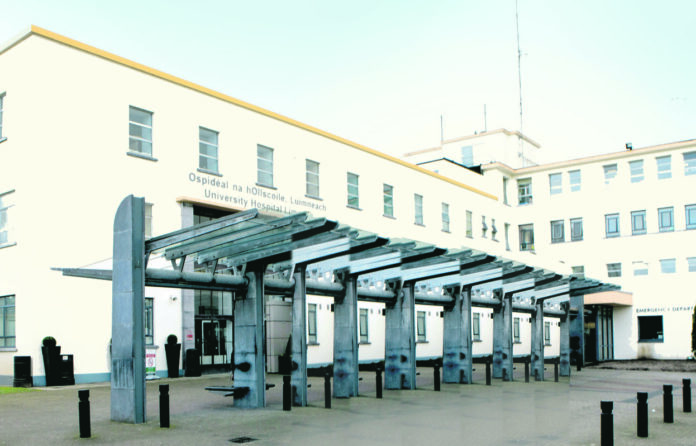
UNIVERSITY Hospital Limerick (UHL) was the most overcrowded hospital in the country in 2025, with 22,473 admitted patients having to wait on trolleys and overflow wards for an in-hospital bed across the year.
That’s according to end-of-year figures published by the Irish Nurses and Midwives Organisation (INMO) from its Trolley Watch count in hospitals across the country.
2025 was the second worst year on record for overcrowding at University Hospital Limerick, INMO said.
The top three most overcrowded hospitals in Ireland last year were UHL, followed by University Hospital Galway with 11,630 patients left waiting on trolleys, and Cork University Hospital with 10,113.

But while 2025 opened with UHL having numbers up to and over 100 admitted patients on trolleys every day – at one point reaching 149 on September 29 – there was a marked decrease in numbers towards the end of the year, with just 22 people waiting in the ED for a bed on December 31.
The fall off in trolley numbers has been all but continuous since the opening of the new 96-bed block by the Health Minister Jennifer Carroll MacNeill in October.
Meanwhile, Limerick Sinn Féin TD Maurice Quinlivan has said that UHL must be the number one health priority for the Government in 2026.
“Fine Gael came into Government in 2011 with a promise to end ‘the scandal of patients on trolleys’, their role on health in government for the last 14 years has been a bitter failure as trolley numbers ballooned and that was felt most keenly by the people who need to access the ED in UHL,” Deputy Quinlivan said.
“Whilst 114,029 people across the state lingered on trolleys, 20 per cent of them were here in Limerick.”
He said the INMO figures remain “a national disgrace”.
“It can easily be forgotten that these are real people. Many of those people being treated on trolleys are often our friends, neighbours, and our family members. They are treated in conditions that deprive them of dignity and privacy.”
The INMO General Secretary Phil Ní Sheaghdha says more needs to be done nationally, adding that “while there has been a slight reduction in the number of patients being treated in an inappropriate space in our hospitals, the reliance on surge beds, which are not properly staffed, is a cause of concern”.
“There needs to be a turning point in how healthcare staffing is planned and managed, and it needs to start with an immediate filling of all funded posts while also focusing on capacity, staffing and conditions across acute and community services.”