


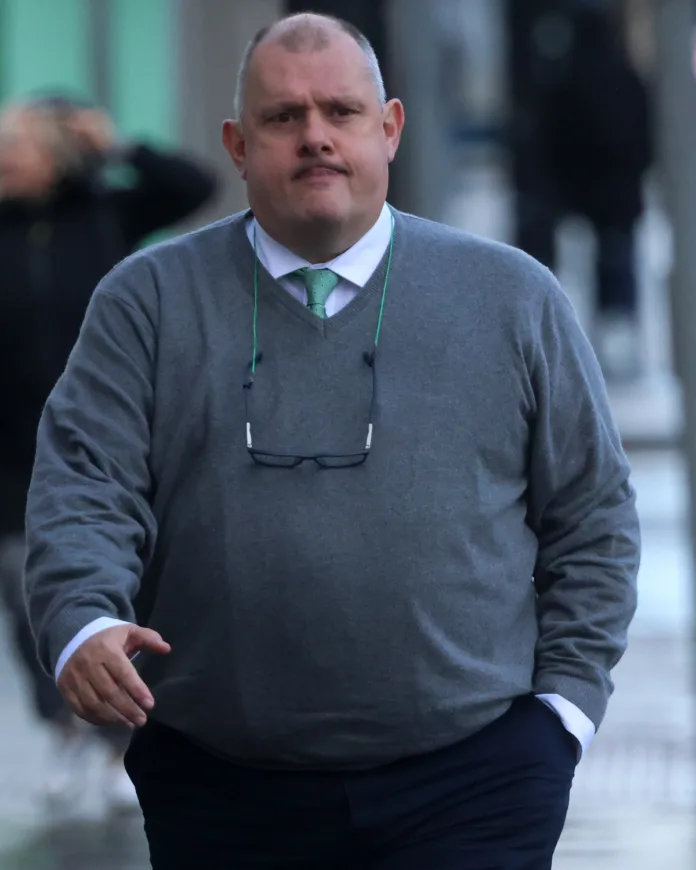
THE TRIAL of a retired superintendent accused of unlawfully squaring away potential or pending road traffic prosecutions heard that he had no legal power to cancel traffic tickets at the time.
Eamon O’Neill, and four serving Gardaí, are on trial at Limerick Circuit Criminal Court charged with a total of 39 counts of engaging in conduct tending or intended to pervert the course of justice.
The four serving Gardaí on trial along with Mr O’Neill are Sergeant Anne Marie Hassett, Sergeant Michelle Leahy, Garda Colm Geary, Garda Tom McGlinchey, all serving in the Limerick and Clare Divisions.
This Monday, the trial, in its eight week, heard from defence witness retired Chief Superintendent Gerry Mahon, who described Mr O’Neill as one of the most dedicated crime fighters he had ever worked with when he served with him and as his superior in the Limerick Garda Division.

- External Walls: Up to €8,000 Grant
- Attic: Up to €1,500 Grant
- Cavity Walls: Up to €1,700 Grant
- Internal Dry Lining: Up to €4,500 Grant
The use of a Garda’s “discretion” when dealing with members of the public has been central to the trial.
Mr Mahon told the court he had worked across all policing strata, including assignments with the FBI and EU Border Patrol, as part of a previous Garda response to “enormous gang warfare” in Limerick City between the late 90s and mid 2000s when, he said, local criminals were importing large shipments of drugs and guns into the city from Europe and South America.
Mr Mahon said Mr O’Neill was one of a handful of Gardaí that were responsible for restoring peace to the streets of Limerick when Gardaí and the public faced “anarchy” from the feuding gangs which, he said, murdered 23 people, including innocent bystanders, between 1997 and the mid-2000s.
He said three innocent members of the public were killed by the gangs, including Brian Fitzgerald (2002), Shane Geoghegan (2008), and Roy Collins (2009).
Mr Mahon said Mr O’Neill had used his “discretion” in respect of an unnamed individual when dealing with the man he had arrested for an alleged public order offence but who requested he be allowed attend a family event.
Mr Mahon said this individual was later attacked and stabbed 20 times in a gang hit, but he survived, and “he would only give a statement to Mr O’Neill” due to the discretion Mr O’Neill showed to him previously.
Mr Mahon said this was a ground-breaking moment, as the norm up to then had been that gangs did not talk to Gardaí.
“As a result, five gang members were charged with murder — it really was the key that opened up the door and decimated the gangs,” Mr Mahon said.
Mr Mahon said Mr O’Neill “saved many lives” while a serving Garda, and helped “put an end to the horrific warfare” at great risk to himself.
“I wish to acknowledge his enormous contribution to the peace and tranquility of the citizens of this city and county.”
The witness said that after he learned Mr O’Neill was charged, he wrote a 17-page letter to the Garda Commissioner outlining Mr O’Neill’s professionalism.
Mr Mahon said after he, himself, was promoted to the rank of Superintendent, he was routinely asked by members of the public “for discretion” and he said he often used it.
He said he often used and sanctioned “light touch policing” in some situations to build the trust of the community: “We brought a common basic humanity to it.”
“You have the law, you have the human being in front of you, and you have discretion, it is in every facet of policing,” Mr Mahon argued.
“A member of the public is entitled to ask a Garda for discretion, a Garda’s application of the law is greatly facilitated by the use of his/her discretion.”
The court heard that under previously Garda policy, local Garda superintendents did have the power to cancel traffic tickets.
The court heard the policy changed following the so-called penalty points scandal, unearthed by Garda whistleblower Sergeant Maurice McCabe.
Senior prosecuting counsel Carl Hanahoe put it to Mr Mahon that a Garda HQ directive implemented in 2014 resulted in the power to cancel traffic tickets being removed from local superintendents and given to three superintendents based out of a “cancelling authority” in Thurles, County Tipperary.
Mr Mahon agreed with Mr Hanahoe that Garda policy at the time meant that Mr O’Neill did not have the power to cancel traffic tickets when it is alleged he was involved in doing so.
Mr Mahon said this might or might not have resulted in a potential breach of Garda disciplinary procedures, but that in his opinion, it was not a criminal offence.
In court this evening, Mr Mahon was shown text messages exchanged between Mr O’Neill and persons, including sports personalities, in which it is alleged he attempted to help square away potential or pending road traffic prosecutions.
Its alleged Mr O’Neill advised at least one motorist to nominate another person as the driver in respect of an alleged speeding offence.
Mr Mahon told Mr Hanahoe that he considered the making of false declarations generally to be “a crime”, but he said he was not able to comment specifically on any allegations against Mr O’Neill as he was not in possession of the facts.
Mr Mahon agreed with Mr Hanahoe that “nobody is above the law”.
Mr Hanahoe put it to Mr Mahon that Mr O’Neill, while a serving Superintendent, was “placing those people above the law as they were friends and inter county hurlers, and that is making a mockery of the equality of what we all enjoy before the law”.
Mr Hanahoe said it also “makes a mockery of the discretion that is lawfully executed by members of An Garda Síochána – and it is undermining the very core of the issue of fairness and importance of upholding the Road Traffic Act”.
Mr Mahon said he could not comment as he was not familiar with the allegations against Mr O’Neill.
“It’s a decision for the jury,” Mr Mahon said.