


“I STILL remember the terror I felt when Gardaí asked for the name of my therapist to request access to my counselling notes. The only safe place I had on this planet was with my therapist.”
These are the words of Limerick woman Caitríona Hickey, bravely speaking out about the sexual assaults she suffered at the hands of her uncle, John Hogan.
On dates between 1994 and 2001, Ms Hickey and Niamh Richardson, another niece of Mr Hogan’s, were sexually assaulted at their family homes in Limerick between the ages of eight and 10. The brave pair waived their right to anonymity so that their abuser could be named in public.
The former university lecturer pleaded guilty to five counts of sexual assault and was jailed in 2022 for three years with the final year suspended.

It took several years for Caitríona to disclose what happened to Gardaí, and even more time before she began counselling. Speaking to the Limerick Post, she recalls the fear she felt when the suggestion of releasing her counselling records was put to her.
“The fact that the notes of my journey through this nightmare could have been requested and used by the defence was another violation and added to my trauma. Facts are evidence. Timelines and pictures are evidence. Notes of processing how to be a functioning human after experiencing gender-based violence is not evidence,” she said.
“Even if you do report what happened to you, you aren’t guaranteed a conviction. The process is traumatising enough having to relive what happened in fine detail, just for the DPP (Director of Public Prosecutions) to create a case. Notes from your safe place should not be available to those that committed the abuse or to the teams defending them,” Ms Hickey said.
In Caitríona’s case, her counselling records were never released to the court, but she says the possibility of it happening left her “shook”.
Under Irish law, the defence must be told if you have counselling records, but not its contents. The defence or prosecution can ask to see the records if they believe they may be relevant to the trial.
Individuals can choose whether they consent to records being released, and can withdraw that consent at any time. Individuals are also allowed to see their records before they are released.
If records are released, they are first reviewed by the prosecuting solicitor. Any information not relevant to the trial is removed. If nothing relevant is found, the records are not shared with the defence.
The defence legal team only sees the parts deemed relevant. The accused may see this information only with their lawyer present and cannot keep a copy. The court can impose further conditions to protect an individual’s privacy.
If individuals do not consent, the judge will decide whether the records should still be released. A hearing will take place and the judge will review the records privately to determine their relevance.
Any relevant information may be used as evidence, and both the prosecution and defence may question the indivdual about it. After the trial, all copies of the records are returned to the prosecution or destroyed.
Current proposed amendments to the Criminal Law and Civil Law (Miscellaneous Provisions) Bill 2025 – governing this process – was brought before the Dáil last week, with a vote expected to take place ahead of this newspaper going to press.
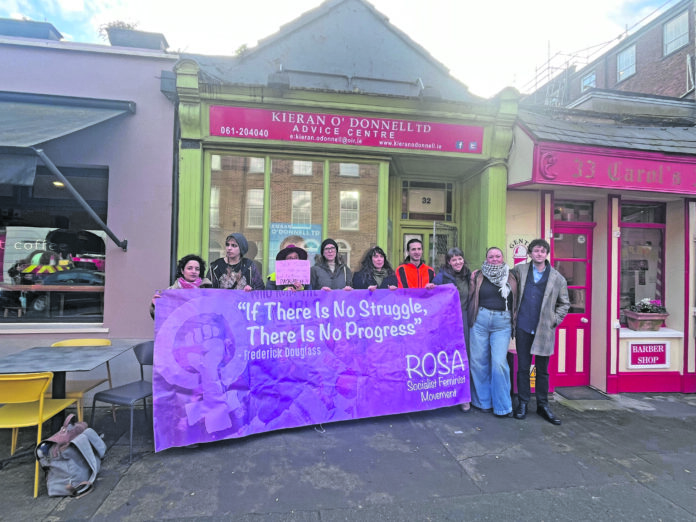
Last week, a protest in Limerick City outside the constituency office of Limerick Minister and TD Kieran O’Donnell took place calling for an outright ban for counselling notes to be accessed during court cases involving sexual abuse.
Socialist feminist organisation Rosa called for a series of changes to the proposed legislation, which they claim allows “judicial oversight on the use of notes in these trials”.
The campaign follows attempts by TD Ruth Coppinger to bring legislation which would have effected a full ban. This was rejected by the government, which is now proposing the bill which still allows for this practice to continue.
Calls for a full ban on the use of such notes in trials is also being sought from counsellors and psychotherapists across the country. Last week, therapists and sexual violence survivors delivered bags of shredded counselling notes to the Department of Justice.
Social Democrats councillor for Limerick City North, Shane Hickey-O’Mara, is one of many psychotherapists in support of banning the use of notes in court, and attended the Rosa protest to show his solidarity.
“I’ve worked with survivors,” he said, “the idea that those notes would be taken and used against that client in a courtroom, when a client has been one of the five per cent of survivors who actually have their case before the court, is terrifying.”
“It’s abandoning clients, and it’s breaking any sense of safety that we’ve built with them,” Mr Hickey-O’Mara said.
-Court Reporting Scheme