


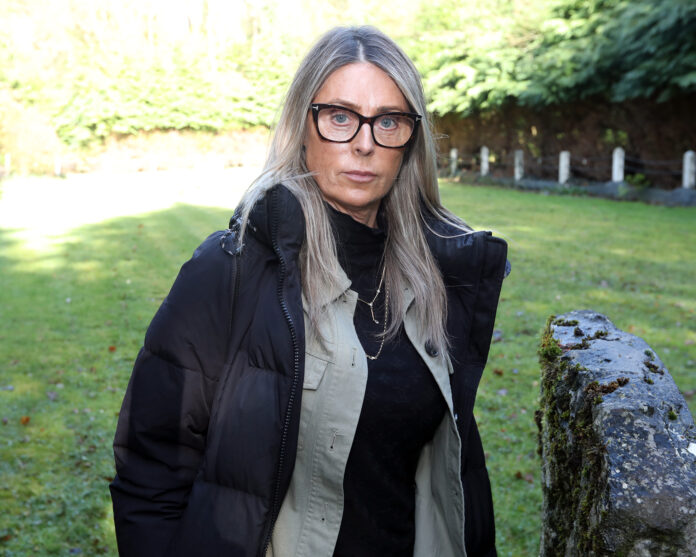
LIMERICK woman and survivor of a mother and baby home, Ann Connolly, has called in an open letter to the Government for fair play for all survivors.
Last week, in a landmark ruling, the Irish High Court found the Minister for Children erred in law by excluding two institutions—St Joseph’s and Temple Hill—from the Mother and Baby Homes redress scheme, ruling in favour of survivors.
This decision compels a review of the exclusion, which previously denied compensation to thousands of, or individuals associated with, certain institutions.
The ruling spurred Sean Ross Abbey survivor Ann Connolly to pen an open letter to the Government, which reads as follows:

- External Walls: Up to €8,000 Grant
- Attic: Up to €1,500 Grant
- Cavity Walls: Up to €1,700 Grant
- Internal Dry Lining: Up to €4,500 Grant
OPEN LETTER TO MINISTER NORMA FOLEY AND THE GOVERNMENT
With the recent High Court ruling in favour of two survivors, the
Government now faces a clear decision: Will you appeal this
judgment, or will you finally admit survivors of institutions have been treated unfairly and begin putting that right?
As a survivor of Sean Ross Abbey, I am asking Minister Norma Foley
and the Government to answer the following questions clearly and
directly.
Question 1: Records, Inspections, and Truth
Will you release the records relating to these institutions,
instead of keeping them restricted for up to 30 years? The
Government says records must remain restricted under legislation and that access is limited to personal information requests. We are told this is to protect identities and comply with data protection rules.
Yet the Commission report itself names inspectors and records their
findings, proving that inspections happened and concerns were
documented at the time. If those facts are already public, who
exactly is being protected now?
These records are not just paperwork. They contain the truth of
what happened inside these institutions: inspections that recorded
conditions, evidence of malnutrition, disease, neglect and high
death rates, and documentation showing how reports were written and sent to Government departments. If those reports had been acted upon, lives might have been saved.
They will also show how pharmaceutical companies were allowed
access to vulnerable babies in these institutions and how vaccine
trials were carried out on babies without their mothers’ consent.
Who allowed pharmaceutical companies access to these vulnerable
babies, and who benefited from it, the State, the religious orders,
or both? Much of this information was gathered from the very bodies that ran these places, the State and the religious orders, and yet those same institutions still control these records.
Survivors lived this history, yet we are told we must wait up to 30 years to see it. By then, most survivors will be dead. I am one of the youngest from Sean Ross Abbey, and even I may not live to see the truth.
Will you release these records now, in full, with personal names
redacted if necessary, so survivors can finally know the truth in
their own lifetimes?
Question 2: Sean Ross Abbey burial ground
Will you fully investigate and excavate the Angels’ Plot burial
ground at Sean Ross Abbey so that the children who died there can
finally be found and their mothers can finally be told the truth
about where their babies are buried?
The Commission of Investigation recorded that 1,090 babies and 23
young girls died in Sean Ross Abbey, one of the highest death rates
of any institution examined.
Only 10 percent of the Angels’ Plot at Sean Ross Abbey was excavated, and remains found there were in coffins. Yet witness testimony to the Commission also stated that some infants were buried without coffins and in quicklime.
After that test excavation, the Government brought in the
Institutional Burials Act, saying it would allow excavation of
burial sites linked to these institutions. That Act uses the term
manifestly inappropriate when deciding whether the State will step
in and excavate, yet this same legislation is now being relied upon
as a reason not to carry out further excavation at Sean Ross Abbey.
If there is witness testimony that some babies were buried without
coffins, and only about 10 percent of the Angels’ Plot at Sean
Ross Abbey has been examined, how can it be claimed that no further excavation is required?
Every child deserved dignity in life and dignity in death. Many
mothers were never told where their babies were buried and are still searching for answers today, some now nearing the end of their
lives.
Will you commit to a full investigation and, if necessary,
excavation of the Angels’ Plot burial ground at Sean Ross Abbey so
that these children can finally be found and their mothers can
finally be told the truth about where their babies are buried?
Question 3: Redress, the 180 day rule, medical card, and counselling
Will you reform the redress scheme so survivors are judged by what
was done to them, not by a rigid 180 day cut off?
A mother could be forced into one of these institutions, give
birth, and have her baby taken from her, and if she was there for
fewer than 180 days, the State decided that experience is worth
€5,000. Whether she was there for one day or several months, the
loss of her child does not change, yet the recognition she receives
does.
For children, the cruelty of the rule is even clearer. A child who
spent fewer than 180 days in an institution may be offered
counselling, an acknowledgement that harm and trauma occurred, yet that same child receives no payment and no medical card.
A child there for 179 days is recognised as needing counselling, but not recognised enough for redress or healthcare, while a child there for 180 days qualifies. Trauma does not suddenly begin on day 180.
Many survivors also have no family medical history, leaving them
unaware of what illnesses they may be at risk of or what screenings
they may need.
Every child born into or confined in these institutions should have access to proper healthcare supports, not be excluded because they fell short of a bureaucratic cut off.
Professionals, including psychologists and trauma specialists,
warned the Government in advance that time limits and exclusions
like the 180 day rule would retraumatise survivors, yet those
warnings were ignored and the scheme went ahead unchanged.
Available figures indicate that a majority of children passed through these institutions for six months or less, meaning the 180 day rule
excludes a huge proportion of survivors.
Will you now remove or reform the 180 day rule so that survivors
are treated with fairness, dignity and real support based on the
harm done to them, not a number of days on paper?
I am writing this not as a politician or a policy expert, but as a
survivor, someone who lived the reality of these institutions and is
still living with the consequences today. The Government has already apologised for what happened. You do not apologise for something unless you know it was wrong.
Your own Programme for Government speaks about recognising survivors’ experiences and learning from the past. If that is true, then the question now is simple: why are survivors still being forced to fight for truth, records, dignity and recognition today?
We are not asking for sympathy. We are asking for answers. Clear
answers, not replies filled with legislation, technical explanations
or reasons why nothing can be done. Survivors have heard enough
process. What we need now is action.
This High Court ruling has put these issues back in front of you.
What happens next is your choice. You can appeal, delay and hide
behind procedure, or you can finally listen to the people who lived
through these institutions and act. Survivors have already carried
this for a lifetime. Many mothers are reaching the end of their
lives still searching for their children, still waiting for truth,
still waiting for dignity.
Answer these questions now, plainly, honestly and without delay,
because justice that arrives when survivors are gone is not justice
at all.
Ann Connolly
Mother and Baby Home Survivor