


A LIMERICK woman was among a group of survivors from industrial and reformatory schools to receive an official apology from the Government.
73-year-old Mary Dunlevy Greene from Kilteely, now living in Carlow, along with Miriam Moriarty Owens, Mary Donovan, and Maurice Patton O’Connell sat in the Dáil last week (Wednesday, February 25) when Taoiseach Micheál Martin issued the apology.
Ms Dunlevy Greene spent the majority of her childhood at Mount St Vincent Industrial School, now the John Henry Newman Building at Mary Immaculate College, just two weeks after her fourth birthday.
Addressing the group, the Taoiseach said “on behalf of the State and all of the citizens of the State, the Government wishes to make a sincere and long overdue apology to the victims of childhood abuse for our collective failure to intervene, to detect their pain and to come to their rescue”.

“As a country and as a Government, we recognised that too many of our children were denied the love, care, and security that should have been theirs. Abuse ruined their childhoods and was, and remains, an ever-present part of their adult lives, reminding them of a time when they were without support or protection”, the Taoiseach read.
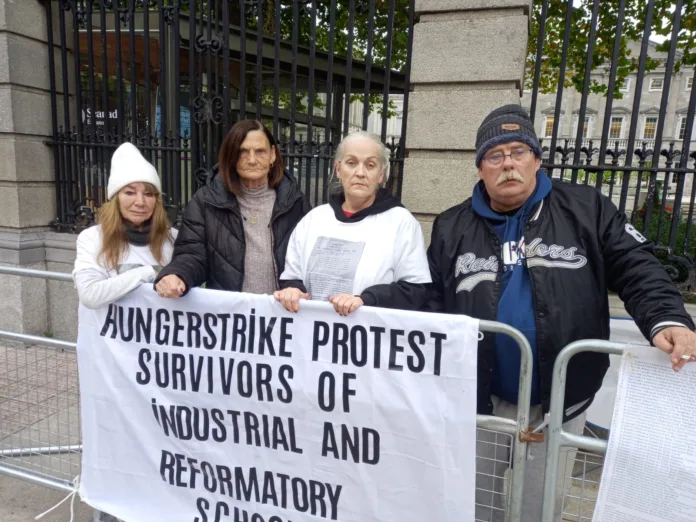
The group went on a 51-day hunger strike which concluded last November, during which time they slept outside Dáil Éireann in a tent.
Reflecting on her time at Mount St Vincent’s, Mary said the school “took every human right” away from her, “you would scrub and clean the floors, clean the church, and every part of the institution. We didn’t even have basics like a toothbrush or face towel, and we never saw our own reflection in a mirror.”
The Taoiseach reflected on the treatment of children in industrial schools, reiterating that “regardless of the pathway from which individuals were boarded out, this was unforgivable”.
“The Government recognised that there were many situations where children in boarded out arrangements were wrongly and harshly treated. They were not raised as part of a family or given the opportunities they should have been in relation to their care and education. We know that some were physically, emotionally, and sexually abused.”
The group during their protest were also calling for a range of support and services to be offered to survivors from the government, including that survivors of industrial schools are not considered to hold a criminal record.
The Taoiseach confirmed in the Dáil, for the record, that “the State did not, and does not, regard individuals, by virtue of their detention in any industrial school as having committed a criminal offence, and that no criminal record is recorded against them”.
In 2023, the Government approved a new phase of ongoing support to survivors of abuse in industrial schools, reformatories, and related institutions, in areas including health, advocacy and education.
However, following concerns about the quality of these supports, the Taoiseach confirmed last week that the Government will work to provide an enhanced package of health services and supports.
These include strengthened access to health services for survivors of industrial and reformatory schools through appointment of dedicated health liaison officers and better access to counselling and physiotherapy services. Work is already underway to put these services in place.
The Government has also agreed to provide additional funding for education grants under the Supports for Survivors of Residential Institutional Abuse Act 2025, as well as enhanced social housing and community welfare supports.
“Survivors have felt stigmatised throughout their lives, and we must be clear and categoric in removing any taint of stigmatisation from public discourse and the public record,” the Taoiseach said, telling the survivors: “What you endured on a daily basis as innocent children was harrowing, heartbreaking, and wrong.”