


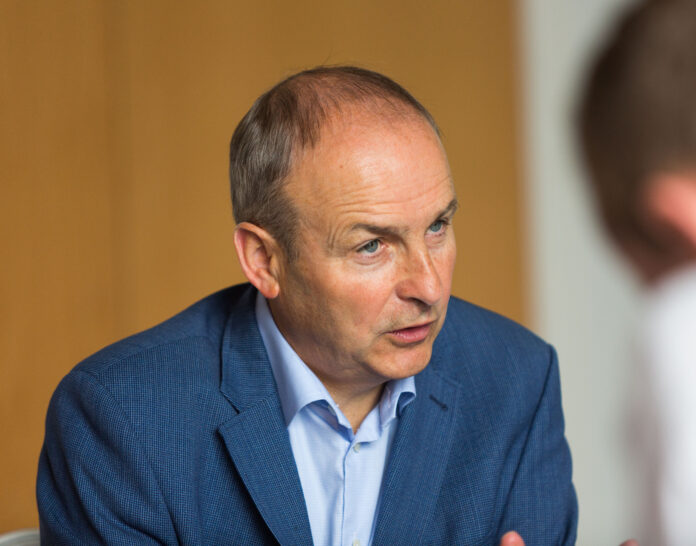
THE Taoiseach said he is committed to supporting EU sanctions on Russia, as it continues its military invasion of Ukraine, but indicated he would not support sanctions on the part-Russian owned Aughinish Alumina plant in County Limerick, despite reported links between the alumina it produces and Russian weapons manufacturers.
Speaking in Limerick, Taoiseach Micheál Martin told reporters that it would potentially harm Ireland more than Russia if he were to support any EU sanctions on the alumina plant, owned by Rusal, a company founded by Russian oligarch Oleg Deripaska.
“Our objective always has been, and we’ve been very strong on this, that we support sanctions against Russia in respect of their invasion of Ukraine. We’ve been very strong on that front, but we’ve always worked on the principle as well that we don’t want to damage ourselves more than damaging Russia,” the Taoiseach said.
“Aughinish Alumina is an extremely important industry to this region, and to a lot of people here, (whose) livelihoods depend on Aughinish Alumina.”

The alumina exporter located on the Shannon Estuary, near Askeaton and the port village of Foynes is the largest alumina refinery in Europe, with around 500 direct employees and 500 more indirect jobs.
The Taoiseach said Aughinish’s outputs are “very important for other member states of the European Union” and because of the potential conflict of its exports being allegedly used by Russian weapons manufacturers, this has made it part of a “complex supply chain”.
“That said, we have to make absolutely sure that the outputs of Aughinish do not end up through intermediaries, facilitating Russia, and that is a real concern, and that’s something that we will examine and work with all the interested parties to get to the bottom of this.”
The alleged links between the alumina exported out of Aughinish to aluminium smelters in Russia, in turn allegedly utilised by third-party weapons manufacturing firms, was first reported as a result of a joint investigation carried out by The Irish Times and the Organised Crime and Corruption Reporting Project (OCCRP).
Mr Martin said his reading of it was that the reported links “seem to be through intermediaries”.
“From the very beginning of sanctions, we’ve been working with our fellow member states to develop measures that would prevent circumvention of sanctions, because there’s been a wide degree of attempted circumvention of sanctions across the board, in many, many products, in many areas, and this is another.”