


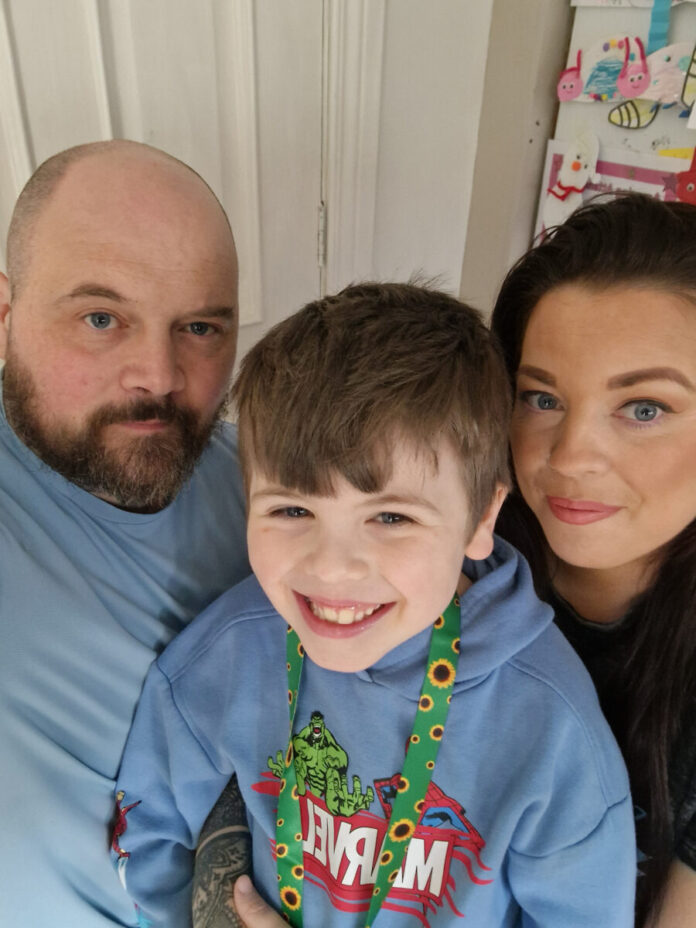
THE PARENTS of a six-year-old Limerick boy who has a little-known form of autism and cannot be educated in any existing class are looking to have the condition better explored and to reach other families suffering in silence.
Declan and Joanne Broderick’s little boy, Alex, has no school place because he cannot cope in any of the current educational environments.
Alex has been diagnosed with Pathological Demand Avoidance (PDA) and, even in a dedicated autism unit, becomes too stressed to fit in.
Alex had to be taken out of school, at his school’s request, because of his agitation moving up from pre-school to junior infants proved too much, his mother Joanne told the Limerick Post.

“He has behavioural difficulties that are particularly related to his condition, but PDA is almost never talked about in Ireland,” she revealed.
PDA is a term often used to describe a specific profile within the autism spectrum.
It is characterised by an intense need to resist everyday demands and a preference for feeling in control. While not officially recognised in diagnostic manuals, it is gaining attention among parents, caregivers, and professionals, according to psychologists in the field.
The condition is not on any scale currently used for diagnosis by the HSE, but it is increasingly being recognised by professionals and many now use the term ‘Persistent Drive for Autonomy’, highlighting the need for a specialised approach based on low-demand by educators and carers.
For the Brodericks, from Castletroy, their heartbreak at having to take Alex home from school is only made worse by the fact that there is no structured alternative.
“I don’t blame the school. They don’t know how to deal with PDA, even in very small classes,” Joanne said. “But we’re at our wits end to know what will happen with his education.”
“He’s a lovely child, but when he anyone tells him to do something, he reacts. He can’t help it. He needs the right approach to get him to co-operate and then he will.”
Among the reactions which Alex has when he comes under pressure are spitting and refusal to co-operate, although with the right understanding and regime, Joanne says he can function in difficult situations, with change being particularly hard for him.
Homeschooling may be an option, but Joanne points out this is not a sustainable answer in terms of Alex learning to cope with the wider world and the future he faces.
“Even his therapist knew very little about PDA. It’s being talked about in the UK but not here. We would love to contact other families who are in this situation and to let them know about our experiences with the education system and alert parents to the fact that a child can be left without any school place.”