


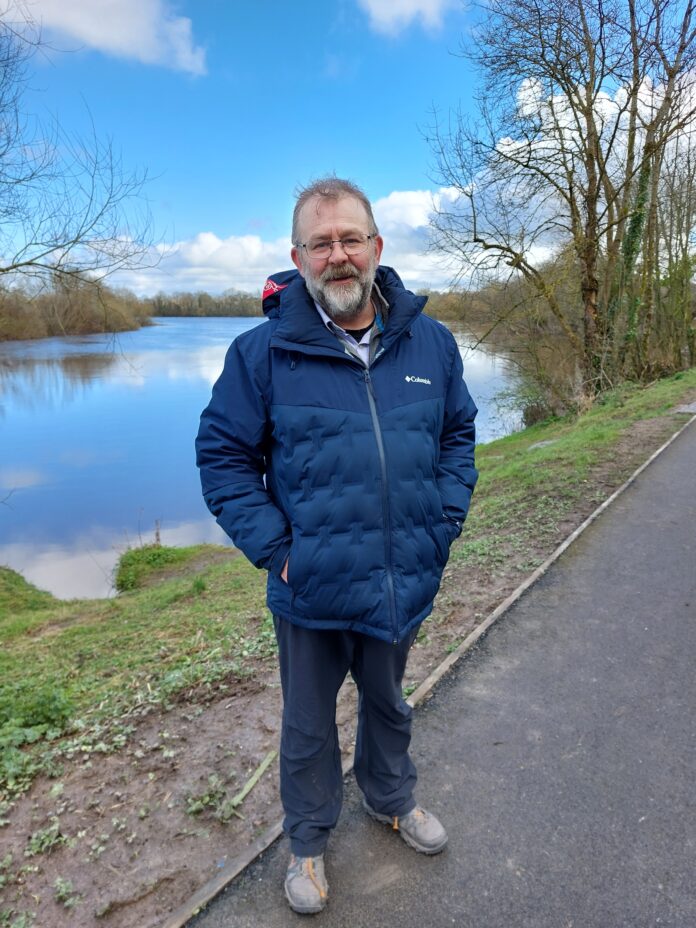
GREEN Party councillor Seán Hartigan challenged recent claims that the Eastern and Midlands Water Supply Project, which will extract and divert water from the Shannon River at the Parteen Basin to Dublin and its hinterlands, is effectively inevitable.
Speaking to the Limerick Post, Cllr Hartigan warned that such assertions undermine public confidence in the planning system and risk pre‑empting decisions that are still legally and procedurally outstanding.
On RTÉ’s News at One recently, Clare Fianna Fáil TD Cathal Crowe suggested that “it’s very obvious that the project will be proceeding”.
Cllr Hartigan hit out at the comments, deeming it inappropriate for any public figure to suggest that a multi‑billion‑euro infrastructure project is destined to proceed when it remains before An Coimisiún Pleanála and subject to further environmental assessment and regulatory approval.

“Ireland’s planning framework exists precisely to ensure that projects of this scale are evaluated rigorously, independently and on the basis of evidence, not political expectation,” the City East councillor commented.
Cllr Hartigan warned that repeatedly framing the project as a foregone conclusion risks “hollowing out” the very processes designed to protect communities, landowners, and the environment. It also, he believes, places unnecessary pressure on statutory bodies whose role is to assess proposals objectively, free from political signalling.
He also expressed serious concern about the environmental implications of large‑scale abstraction from the River Shannon, particularly at a time when climate change, biodiversity loss, and increasing drought frequency pose real and growing risks.
“The Shannon is not an unlimited resource, and it is already heavily regulated for navigation, energy generation, and flood management. Treating it primarily as a strategic supply reservoir for the east of the country, without absolute certainty around ecological safeguards, raises profound questions about long‑term sustainability.”
Cllr Hartigan concluded by stating that “questioning political narratives is not opposition to national water security, but a defence of lawful decision‑making and environmental responsibility”. If the project is to proceed, he said, it must do so “because it has passed every planning, legal, and environmental test — not because its outcome has been declared in advance.”