


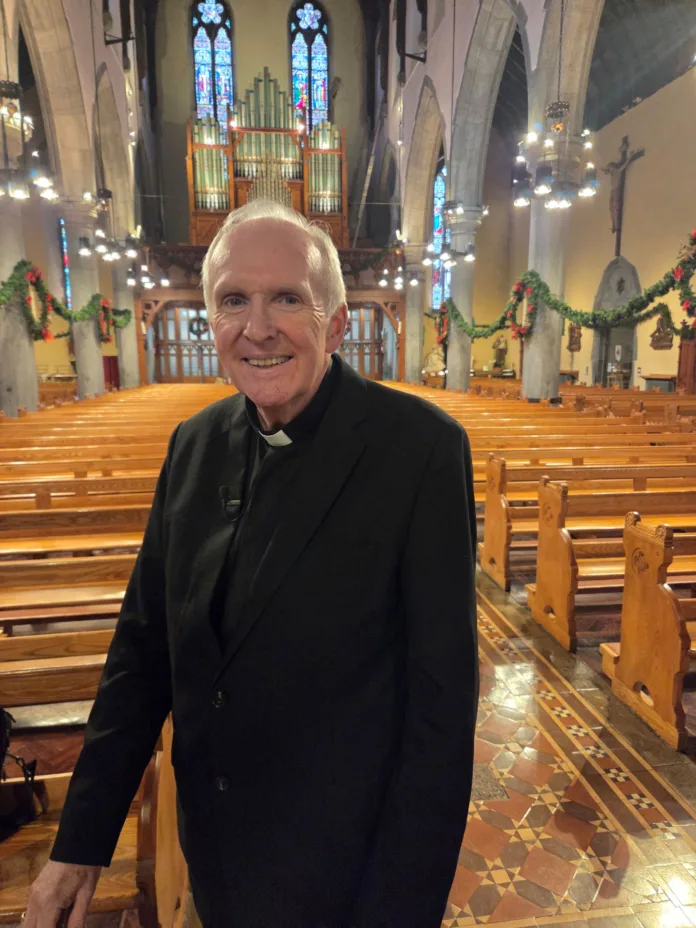
A GREATER role for women and lay people is being planned in Church matters by Bishop of Limerick Brendan Leahy.
The Bishop said in a letter to be read at masses this past weekend that an ageing clergy and ministry needs to be rejuvenated if the Church in Limerick is to survive and thrive into the future.
Bishop Leahy’s decision on how to move forward follow the findings of an extensive consultation process with parishioners across the Diocese, which identifies strong faith, community spirit, and a desire for vibrant parish life as enduring strengths.
The consultation process found strong support for greater lay ministry, expanded roles for women in parish leadership, improved training and formation opportunities, stronger engagement with young people and families, and increased collaboration between neighbouring parishes.

To support these priorities, Bishop Leahy announced his plans to establish five new diocesan resource centres focused on parish leadership, training and formation, digital engagement, inclusion and outreach, and stewardship and governance.
In his letter, Bishop Leahy acknowledged that the Church is entering a period that will require difficult decisions and new ways of working and urged a broadening of volunteerism across parishes.
“The consultations show clearly that people want their parishes to thrive, not merely survive. They want faith passed on, liturgy renewed, young people welcomed, and communities strengthened,” he said.
“We must also be honest about the challenges ahead. Many of the proposals brought forward are excellent, but they come at a time when both clergy and parishioners are ageing, and when the pool of volunteers is smaller than before. We cannot keep asking the same faithful people to take on more,” Bishop Leahy said.
Bishop Leahy said the future vitality of parish life will depend increasingly on the willingness of lay people to become actively involved in ministry and leadership.
“Unless more people are willing to become actively involved in the life of the parish, many of the aspirations and proposals that emerged from the parish consultations will be difficult to realise. The call for more lay involvement is not abstract; it is real and urgent,” he said.
Bishop Leahy also addressed concerns about the future of church buildings, acknowledging that while parish churches remain deeply valued by local communities, maintaining them presents growing challenges.
“Some parishes are in a precarious position. Running a parish and maintaining church buildings costs money. I do not intend to close churches unless a parish reaches a point where it cannot, financially or in terms of safety, keep the building open.
“We are not at that point now, though one or two are close,” he said.
The Diocese must plan responsibly, he said, for the future and avoid leaving unsustainable burdens for future generations.
The report also points to greater collaboration between parishes and pastoral units as an essential element of future planning. In some areas, parish amalgamations may need to be considered as communities seek to preserve local faith life while sharing resources and responsibilities.