


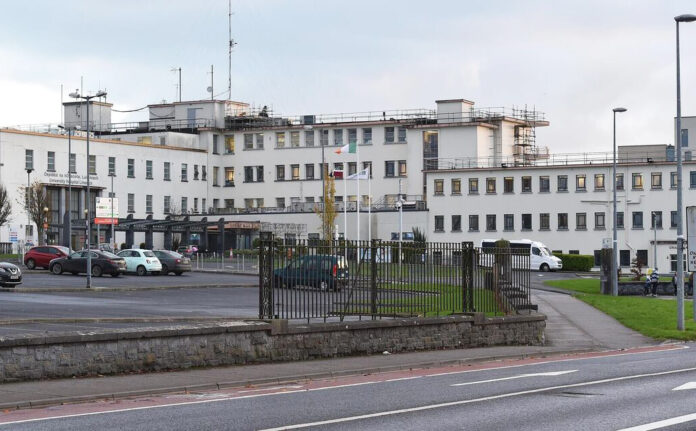
A SPECIALIST unit aimed at helping older adults attending the emergency department has slashed the number of elderly people admitted to hospital and is expanding operations at University Hospital Limerick (UHL) this winter.
The Geriatric Emergency Medicine (GEM) Unit, which opened in October 2022, has more than doubled the number of assessment spaces following recent renovations and has extended operating hours to run around the clock on weekdays.
Until the unit was established, around half of all patients aged 75 or over who came to the ED had to be admitted to a bed in the hospital.
But that number has been reduced to less than one in three with other options now possible through assessment by a multi-disciplinary team.

Suitable patients aged 75 years and over who present to the emergency department (ED), and who may benefit from a multidisciplinary assessment, are streamed at the point of triage to the GEM Unit.
Additional health and social care professionals (physiotherapy, occupational therapy, medical social work), as well as medical and nursing staff, have been recruited to support this initiative.
Clinical governance is provided by consultants in emergency medicine. Following a comprehensive assessment and intervention, the multi-disciplinary team explore alternative care options and pathways with the older adult, if appropriate to do so, including continuing their care at home, in a community setting, or in a Model 2 hospital.
Of the just under 80,000 patients who attended the ED at UHL in 2022, 15 per cent were aged 75 and over. This age group is also more likely to be admitted to hospital with over half of all over 75s who attended ED in Limerick and around the country last year having been admitted.
With the GEM Unit offering alternative care options and pathways, less than one in three older adults has required admission to UHL so far this year, according to hospital figures.
Data from January to November 2023 shows that of the 1,788 patients seen, 1,042 patients were discharged to their home, 222 were transferred to a Model 2 hospital, such as St John’s Hospital, and 524 were admitted to UHL.
Íde O’Shaughnessy, clinical specialist occupational therapist, explained the importance of developing coherent alternative care pathways for older patients.
“When any older person living with frailty comes in to the emergency department, they are at risk of adverse outcomes such as falls, deconditioning, malnutrition or dehydration,” said Ms O’Shaughnessy.
“What the GEM Unit offers is timely team-based assessment in a dedicated environment that is attuned to their needs. Patients in the GEM Unit have their essential needs met in a way that mitigates against the adverse outcomes we know are associated with being on a trolley for a long period of time.
“We are reducing the risk to patients by mobilising them earlier, ensuring optimal nutrition and hydration and other care needs earlier and by having our patients more involved in decision-making with regard to their healthcare outcomes.”
Recent renovation works have more than doubled the capacity of the GEM Unit, a spokesperson for the hospital said. Opened in October 2022 with five assessment spaces, the service now has space for nine patients (including a new isolation bay) and additional seating which brings the total capacity to 12.
With the unit now operating 24 hours a day from Monday to Thursday, throughput on a single day can reach up to 20 patients.