


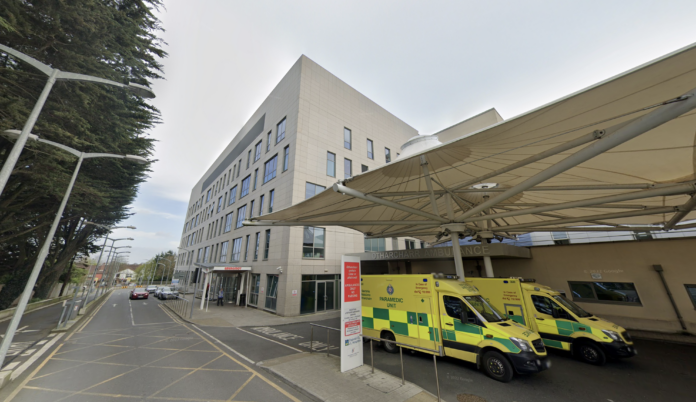
THE ongoing crisis of patients languishing on trolleys along corridors at the University Hospital Limerick over decades continues this week despite the opening of a new 96-bed block at the hospital last October.
UHL has been persistently the most overcrowded hospital nationally in recent year, with Government plans to provide additional bed capacity following numerous reports, which found the prolonged overcrowding presented an ongoing risk to patient safety.
On Tuesday, 803 patients were admitted to hospitals across all of Ireland without a bed, according to Trolley Watch figures from the Irish Nurses and Midwives Organisation. 127 of these were at UHL – the highest number of any Irish hospital so far this year.
INMO general secretary Phil Ní Sheaghdha said: “Yet again we are seeing huge numbers of patients being admitted to hospital without a bed. We know when activity is this high across the system, patient and staff safety suffers.”

- External Walls: Up to €8,000 Grant
- Attic: Up to €1,500 Grant
- Cavity Walls: Up to €1,700 Grant
- Internal Dry Lining: Up to €4,500 Grant
Ms Ní Sheaghdha said nursing staff were “very concerned about the age profile of patients” being admitted to hospital on trolleys.
“In one location a 90-year-old was waiting on a hard chair for over 45 hours before receiving a bed,” she said.
“In another location, over 72 per cent of admitted inpatients are over 75. The fact that older citizens who have been deemed sick enough for admission are being treated on trolleys, chairs and other inappropriate spaces for long periods is distressing.”
Ms Ní Sheaghdha complained that nursing staffing levels “remains problematic” across many hospitals, which was “unsafe”.
“The continued use of trolleys and reliance on surge capacity mean that too many nurses are routinely working short-staffed.”
“In many hospitals, unfilled rosters are becoming the norm rather than the exception, creating increasingly unsafe conditions for both nurses and patients.”
Following the opening of the first of three 96-bed-blocks at UHL last October, the number of patients left waiting on trolleys at the Dooradoyle hospital had decreased notably. However, figures have surged this week with 125 reported by INMO on Monday, 127 on Tuesday, and 89 on Wednesday.
Health minister Jennifer Carroll McNeill said three options proposed by HIQA to ease chronic overcrowding at UHL would be followed up by government.
These included the expansion of capacity at UHL on the Dooradoyle site (Option A), the extension of the UHL campus to a second site in close proximity under a shared governance and resourcing model (Option B), and the development of a new Model 3 hospital in the Mid West to include a new emergency department (Option C).
On Monday (January 12), HSE Mid West sent out a warning to people across the Mid West to consider “alternative care options” before presenting to the overcrowded UHL emergency department (ED). That day, according to INMO stats, there were 125 people left waiting on trolleys at the Dooradoyle hospital.
The HSE said that UHL was “currently experiencing a significant increase in attendances” and appealed to those with “non-urgent health needs” to seek support through alternative options before presenting at the UHL ED – listing Shannondoc (0818 123 500), the local injury units at Ennis (065 686 3121), Nenagh (067 423 11), and St John’s hospitals (061 462 132) as appropriate alternatives, along with medical assessment units in the region, local pharmacies, and family GPs who can make referrals to the ED.
The health service said that a record 95,373 people attended the UHL ED last year, making it the busiest emergency department in the country with the highest annual increase in presentations of 10 per cent. The HSE said that “pattern of high attendances has continued into 2026”.
A spokesperson said: “We apologise to every patient who has experienced long waits for a bed in UHL. Our staff are doing everything to provide the best possible care.”