


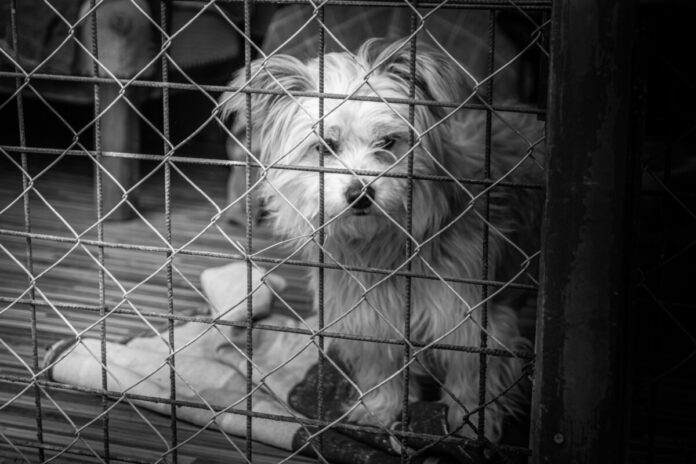
WOMEN attempting to flee domestic violence will often return to their abuser to protect their beloved household pets suffering the same abuse they have endured.
According to Limerick domestic abuse services provider ADAPT, many women are afraid to leave a relationship if threats are made and in some cases followed through to hurt their pets if they leave.
Denise Dunne, director of services at ADAPT, said this is something the charity struggles with on regular basis, explaining: “We don’t have the space to bring pets into refuge with their owners … there doesn’t seem to be any organisation set up for women to leave their pets free of charge if they can’t afford to put them into kennels.”
“Some women are very attached to their pets as well, or where children are involved they might not want to leave the pets behind at home.”

Calls are now being made on the Irish government to amend domestic violence legislation to explicitly recognise pet abuse as a distinct form of coercive control within abusive relations.
The Sonas domestic violence charity is also urging for legislative reform similar to the ‘Ruby’s Law’ campaign in the UK, which has progressed to Bill stage in the Parliament.
Proposed reforms under the law in the UK include explicit recognition of pet abuse as coercive control, protection of pets within domestic violence protection orders, powers to prevent alleged abusers from interfering with animals and recognition that harm to animals can form part of wider domestic abuse patterns.
While Irish legislation currently acknowledges animal cruelty as a relevant factor in domestic violence cases under the Domestic Violence Act 2018, Sonas claims it does not go far enough in protecting pets and their owners.
In addition to the proposed reforms put forward by the UK government, Minister for Justice Jim O’Callaghan is being urged to take additional measures including enabling temporary transfers or protection arrangements for companion animals.
In a statement to the Limerick Post, a spokesperson from the Department of Justice said: “Combatting all forms of domestic, sexual, and gender-based violence, and ensuring that victims and survivors are fully supported, remain absolute priorities for this Government.”
“These commitments underpin the Third National Strategy on DSGBV and a key element of achieving the Strategy’s aims is through robust legislation. The offence of coercive control, provided for under Section 39 of the Domestic Violence Act 2018, recognises and criminalises patterns of psychological and emotional abuse within intimate relationships. A person convicted of this offence is liable to receive a fine or face imprisonment for up to five years.”
The Department spokesperson added: “This Department keeps the operation of this, and all criminal legislation, under constant review to ensure that it is achieving its intended purpose. Animal abuse is a criminal offence under the Animal Health and Welfare Act 2013 and anyone who is aware of any mistreatment of an animal should report it to the relevant local authority or An Garda Síochána.”
ADAPT said it would welcome the legislation similar to Ruby’s Law in Ireland to protect women, but the challenges don’t end once a woman manages to escape a violent home with their pets in tow.
Once women seek refuge, they will more than likely struggle to find affordable accommodation and often getting a pet-friendly home is a luxury they are unable to avail of.
“Pet friendly is really the least of their worries at that moment in time,” Denise Dunne said, “because they may end up in hotel accommodation before being offered a stable home.”
“Women often go back to keep an eye on the animals if they are worried about them, and in some cases, they will go back to the relationship to make sure nothing happens to them.”
Barrister Mariana Verdes says the case for an Irish version of Ruby’s Law is both practically and legally compelling.
“Irish law already recognises animal cruelty as relevant in domestic violence cases, animal welfare law already protects domestically kept animals, and child welfare law already requires courts to consider harm arising from household violence and a child’s psychological wellbeing,” she said.
“What is missing is the bridge between those strands: explicit recognition that threats, cruelty, removal, or neglect of a companion animal can be used to coerce, intimidate and control a victim-survivor or a child. The UN Committee on the Rights of the Child has also made it clear that children must be protected from physical and mental violence, including exposure to violence inflicted on animals, reinforcing the need for Irish law to treat pet abuse as a child welfare and domestic abuse concern.”
Christine Warner, barrister and founder of the Ruby’s Law campaign said that “Ruby’s Law exists to protect the most vulnerable in abusive households, including pets who are often silent victims”.
“No one should have to choose between their own safety and the safety of their animals. Recognising pet abuse as a form of coercive control is essential to safeguarding survivors and ensuring the law protects all members of the family.”
– Court Reporting Scheme