


A NEW report examining food insecurity in Limerick has been published and highlights strategic action needed to tackle the issue.
Limerick City and County Council, working with Limerick Food Partnership, published the research report titled Building Sustainable Food Futures: Food Insecurity, Community Provision and Strategic Action in Limerick City and County.
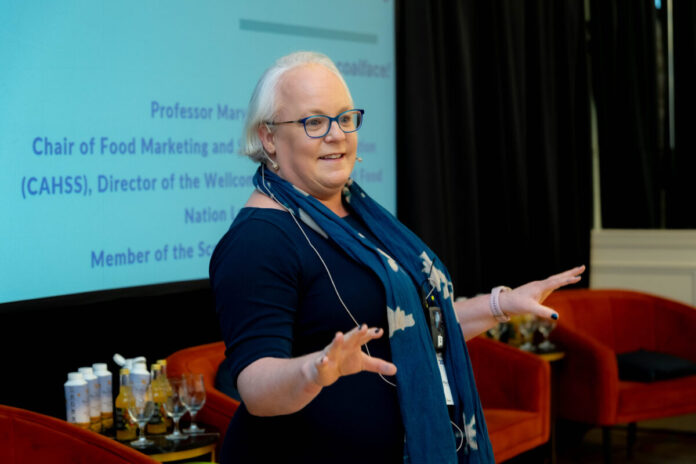
Findings were launched at the Limerick Food Partnership Conference last Friday (April 17) at the Woodlands House Hotel in Adare.
Catherine Caball, Limerick Food Partnership co-ordinator, says the report outlines “tangible solutions”.

“Three years ago, Limerick Food Partnership, with the support of Healthy Limerick, commissioned me to examine food insecurity across Limerick city and county. Over that time, I met extraordinary people, showing immense community spirit, generosity, and determination, often while working with very limited resources.
“I saw real food inequality, people with no reliable access to food, fully aware that this directly affects their health, dignity, and life chances”, Ms Caball added.
The three-year study, commissioned by the Council’s Healthy Ireland programme, combined large‑scale surveys, community focus groups, assemblies, and detailed geographic mapping of food supports, retail food environments, transport links and local infrastructure across urban and rural Limerick.
The findings highlight that food insecurity in Limerick is not confined to areas of visible disadvantage. Instead, it is often hidden and shaped by a combination of factors including income insecurity, housing and homelessness, health challenges, transport barriers and fragmented access to information.
The report also informed the development of a public-facing Food Access app, designed to help individuals and families identify local food supports and services more easily.
A restricted-access Food Access Dashboard, enabling policymakers, the local authority, and community organisations to use local data has also been established.
While the report documents a strong network of community, voluntary and statutory services addressing food needs across Limerick, it also highlights that many of these services are operating at or near capacity, often relying on volunteers, short‑term funding, and surplus food supplies.
The research shows that many households experiencing food insecurity do not access formal food supports, often due to concerns about dignity, visibility, limited choice or lack of information. As a result, food insecurity can remain hidden until it becomes acute.
By combining lived experience with mapping and data analysis, the report identifies food insecurity as a whole‑system challenge, requiring more coordinated, preventative and dignity‑centred responses.
The report also outlines a path forward with eight recommendations including increased investment in Meals On Wheels and the establishment of a choice-based social supermarket food support model.