


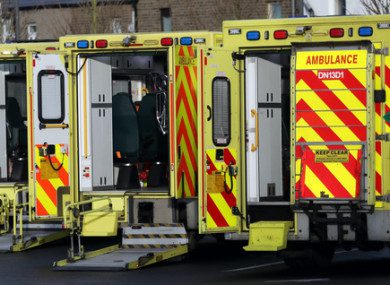
A SUMMER of critical pressure on the ambulance service in Limerick is expected as ambulance staff prepared for rolling strikes over pay and conditions.
Ambulance cover was severely impacted across the city and county during the first of several strikes held on Tuesday.
Management at the National Ambulance Service (NAS) said that as it was “significantly concerned” about the service’s “ability to keep patients safe” during Tuesday’s strike action, staff unions SIPTU and Unite engaged with the HSE “to ensure contingency arrangements” to rescue the “risk” to patients safety “in so far as possible”.
NAS management escalated emergency cover to “NSCAP Level 4” critical cover and asked staff to remain vigilant, prioritise patient safety, and escalate operational concerns through appropriate channels.

The industrial action supported by unions SIPTU and Unite is primarily over life-saving paramedics arguing that additional responsibilities and training tied to their roles had not been reflected in their wages.
Staff who stood on the picket line at the National Ambulance Service (NAS) base in Dooradoyle, and around the country, said they had “no choice” but to go on 24-hour strike.
Further industrial action is planned in Limerick and nationally, including 48-hour strike action on May 19, followed by 72-hour action on May 29, and a period of rolling strikes from June 1.
SIPTU denied that lives were put at risk by Tuesday’s 24-hour strike action, in response to a warning by the Irish Association for Emergency Medicine that the industrial action posed a “significant risk” to lives.
Taoiseach Micheál Martin said Tuesday that the only way to resolve the dispute was “through dialogue and through exhausting the well-established industrial relations machinery of the State”.
Sinn Féin leader Mary Lou McDonald accused the Government of leaving the ambulance service “stretched to breaking point, understaffed, underpaid” – a claim supported by Limerick Post sources in the ambulance service in the Limerick region.
Mr Martin rejected Ms McDonald’s claims and said the State had offered pay increases of between three and 14 per cent linked to service reforms, “on top of the 9.2 per cent increase under the current Public Service agreement”.
The HSE said the offer under the service agreement had been rejected by more than 70 per cent of those who took part in Tuesday’s strike action.
The unions involved said the strike action was linked to future changes in work practices and that previous changes had not yet to be deal with.