


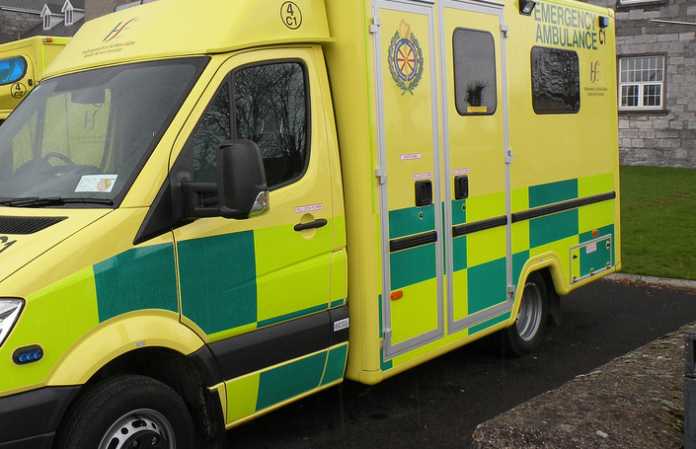
LIFE-SAVING ambulance staff are pressing ahead with plans for industrial action, up to and including strike action, from May 12.
The first day of action will include a 24-hour stoppage after thousands of SIPTU and Unite union members overwhelmingly voted for the action.
This will be followed by a period of 48 hours action on Tuesday Mau 19 and 72 hours action on Tuesday May 29.
Thereafter, rolling periods of action will be determined by a national strike committee from June 1.

The industrial action, which will run from 8am to 8pm each day, is being organised via a national committee made up of SIPTU/Unite representatives on the Irish Ambulance Representative Council (IARC) and local full-time officials, in conjunction with six regional strike committees.
Sources in the ambulance service said the service was “in crisis” and that paramedic crews were trying to “fill gaps” across the service.
Sources said the service is expected to be greatly impacted, but staff were “left with no choice but to strike”.
SIPTU said the dispute centres on a failure to implement recommendations of an independent 2020 report into paramedic and advanced paramedic roles in the National Ambulance Service (NAS).
The dispute also involves a non-adherence to existing agreements involving emergency medical technicians (EMT), paramedics, advanced paramedics, paramedic specialists (community/advanced), and paramedic/advanced paramedic supervisors.
All other grades during any period of industrial action or strike action will work as normal in their own role, sources said.
SIPTU Ambulance Sector Organiser John McCamley said: “The Independent Review of Roles and Responsibilities report, published in May 2020, was to address these ongoing changes, including updating salary scales.”
“To date, its recommendations have not been implemented. SIPTU members have been left with no other option but to issue notice for strike action due to this long-running dispute,” said Mr McCamley.
“A work-to-rule will also be put in place from 11th May, involving non-cooperation with new procedures or changes. The dispute arises from the NAS’ failure to update staff salary scales to reflect changes in their responsibilities and workload over the last 20 years,” he added.
Mr McCamely said his union’s members feel “their sacrifice and commitment to the professionalisation and modernisation of the service have been forgotten about by the HSE”.
Mr McCamley said the service model had moved away “from just a patient transport to a higher degree of pre-hospital care and treatment”.
“Operational practice guidelines for dealing with different incidents have increased dramatically over the years, including the need for additional training and qualifications.”
Mr McCamley said ambulance staff are “highly trained” and work in a “hazardous environment” and they deserved more for their role.
“Our members exercise clinical judgement, deliver complex and lifesaving care, including the administration of medications. For instance, EMT and Paramedic grades have increased their responsibility for administering various medications by 89 per cent and 83 per cent, respectively, since 2011,” he said.
“They perform life-saving interventions and make complex decisions about specific care pathways.
“All we are asking is that, like other health professionals, their training qualifications are respected and recognised in an appropriate grading and pay structure.”
Mr McCamely called on the HSE “to introduce enhanced pay scales which properly recognise the training and professional level of our members”.
The HSE said previously that it had met with SIPTU and Unite last February and that it was committed to engaging with the unions on Workplace Relations Commission proposals.
“This proposal was rejected by SIPTU and Unite, who immediately advised of their intention to ballot for industrial action,” the HSE said.
The HSE said it was committed to finding a resolution and called upon SIPTU and Unite to continue to engage with it over the issues.
The HSE and NAS have been contacted for comment.